
The heart of battling in Pokemon is types, and knowing which type beats which is like having an edge before the fight even starts. This guide gathers the full pokemon type chart for all 18 types in one place, covering the types that deal heavy damage, the ones to watch out for, how to read the chart, the dual type math that confuses many players, and the small differences when you play Pokemon GO. By the end you can send out the right Pokemon with confidence, without opening a chart every time you face a new matchup, and plan your team far more sharply than before.
What is the Pokemon type chart and how do you read it
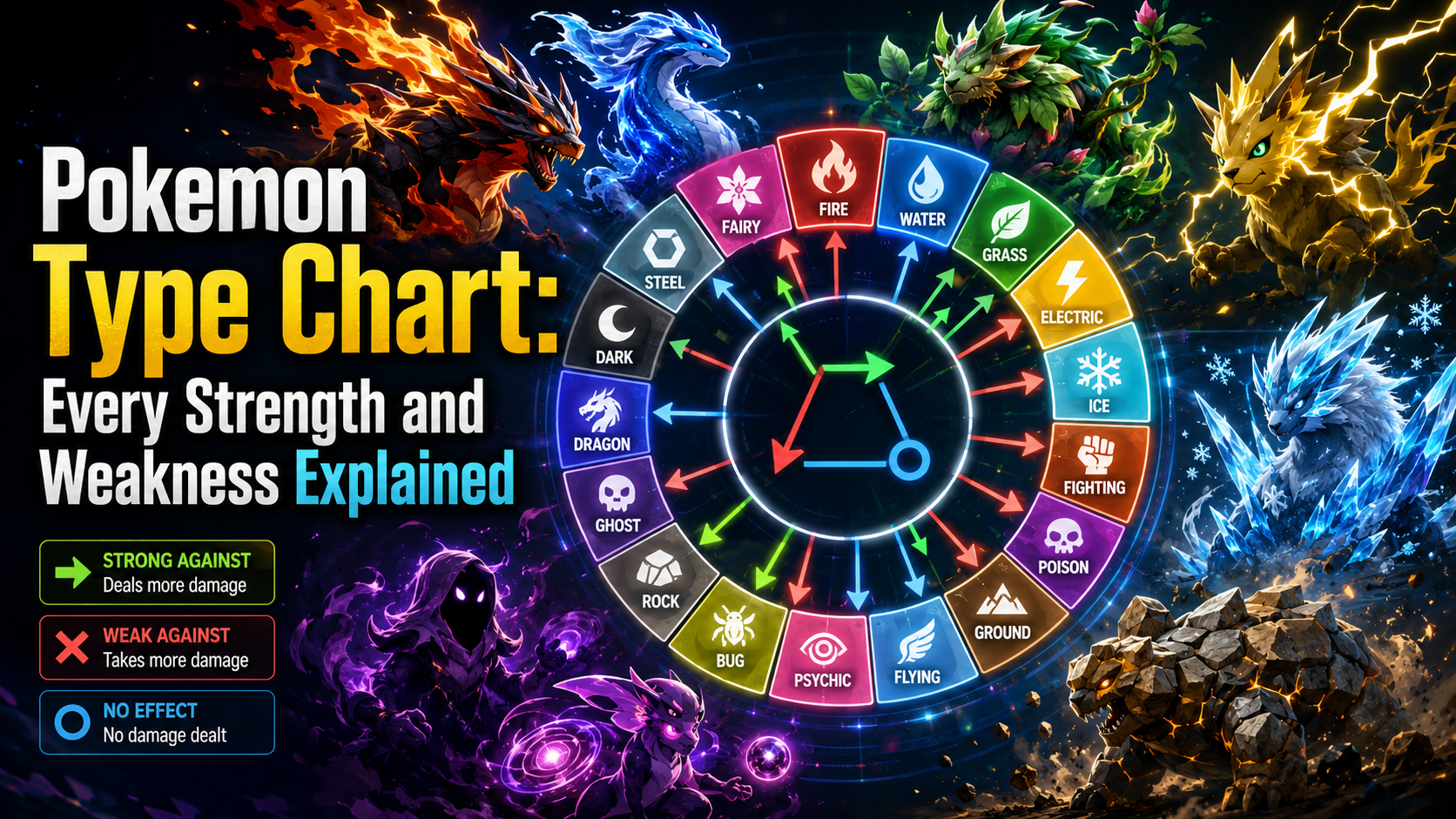
The type chart is the system that tells you how well one type of attack works against another. There are three main levels to remember. The first is super effective, which deals double damage. The second is not very effective, which deals half damage. The last is immune, which deals no damage at all, such as an Electric attack doing nothing to a Ground type. Once you understand these three levels, reading the chart gets much easier, since it all comes down to comparing the attacking type with the target type. It also helps to remember that a move's own type matters, since an attack that matches the user's type gets a damage bonus called STAB, which stacks on top of any type advantage for even bigger hits.
The full Pokemon type chart for all 18 types
The table below sums up which types each type hits hard (Strong against) and which types hit it hard (Weak to). Just find the row for the type you care about.
This chart applies to modern main series games with all 18 types. If you play very old titles, a few relationships may differ slightly, but the overall picture is mostly the same.
To see which Pokemon are actually strong enough to bring into battle, check our Pokemon tier list as well
Which types are strong and which to watch out for
Looking at the chart, some types defend brilliantly, such as Steel, which resists many types, and Fairy, which handles Dragon so well it can turn a battle around. The types to watch are Rock and Grass, which have several weaknesses and get punished easily if you send them into the wrong matchup. Another interesting point is Dragon, which hits its own type hard, which is why Dragon versus Dragon fights often end fast. Understanding these strengths and weaknesses helps you balance the attackers and defenders on your team. A simple habit is to pair a defensive anchor that resists common attacks with an offensive threat that punishes them, so your team is never left without an answer to a dangerous type.
How dual type Pokemon calculate damage
Many Pokemon have two types at once, so working out weaknesses means multiplying the effects of both types. For example, if a Pokemon is weak to Water from both of its types, it takes a huge four times damage. On the other hand, if one type is weak but the other resists, the effects can cancel out to normal. This is why some dual type Pokemon are brutal, since they cover each other's weaknesses, while others are especially fragile because their weaknesses stack. When planning a team, always look at both types, not just the main one. The same goes for planning your own attacks, since a single well chosen move can hit a dual type for four times damage and end a fight in one turn.
Does the type chart differ in Pokemon GO
Type relationships in Pokemon GO follow the same logic as the main games, so which type beats which stays the same, but the damage numbers differ. A type that has the advantage deals about one and a half times damage instead of double, and the clear difference is that Pokemon GO has no zero damage. A type that normally has no effect deals very little damage instead. So if you know the chart from the main games, you can use it in GO right away, just knowing that the advantages and disadvantages are less extreme. It is also worth noting that GO has no held items or abilities changing type matchups, so the chart stays clean and predictable once you learn it.
Pokemon GO players who want a strong team can read about Eevee evolutions and how to get them next
Tips to memorize the type chart
Instead of memorizing the whole chart, start with the three basic pairs everyone knows: Fire loses to Water, Water loses to Electric and Grass, and Grass loses to Fire. This cycle is the core that helps you guess other matchups. Then add the standout types like Steel, Fairy, and Dragon a little at a time. Another method that works is learning from real play, since getting punished hard once tends to burn that matchup into memory. Before long the whole chart lives in your head without a lookup. Keeping a printed or saved copy of the chart handy for your first few battles speeds this up, and quizzing yourself on one type at a time makes the rest fall into place faster.
Know your types and win from the first turn
The type chart is the foundation that makes Pokemon deeper and more fun than it looks. Once you know which type has the advantage, can handle dual types, and understand how Pokemon GO differs, you can pick the right Pokemon from the very first turn. Keep this chart nearby at first, and before long you will remember it on your own and never need to look again. With the basics locked in, every battle becomes a quick mental check instead of a guess, and building a balanced team starts to feel natural rather than intimidating.
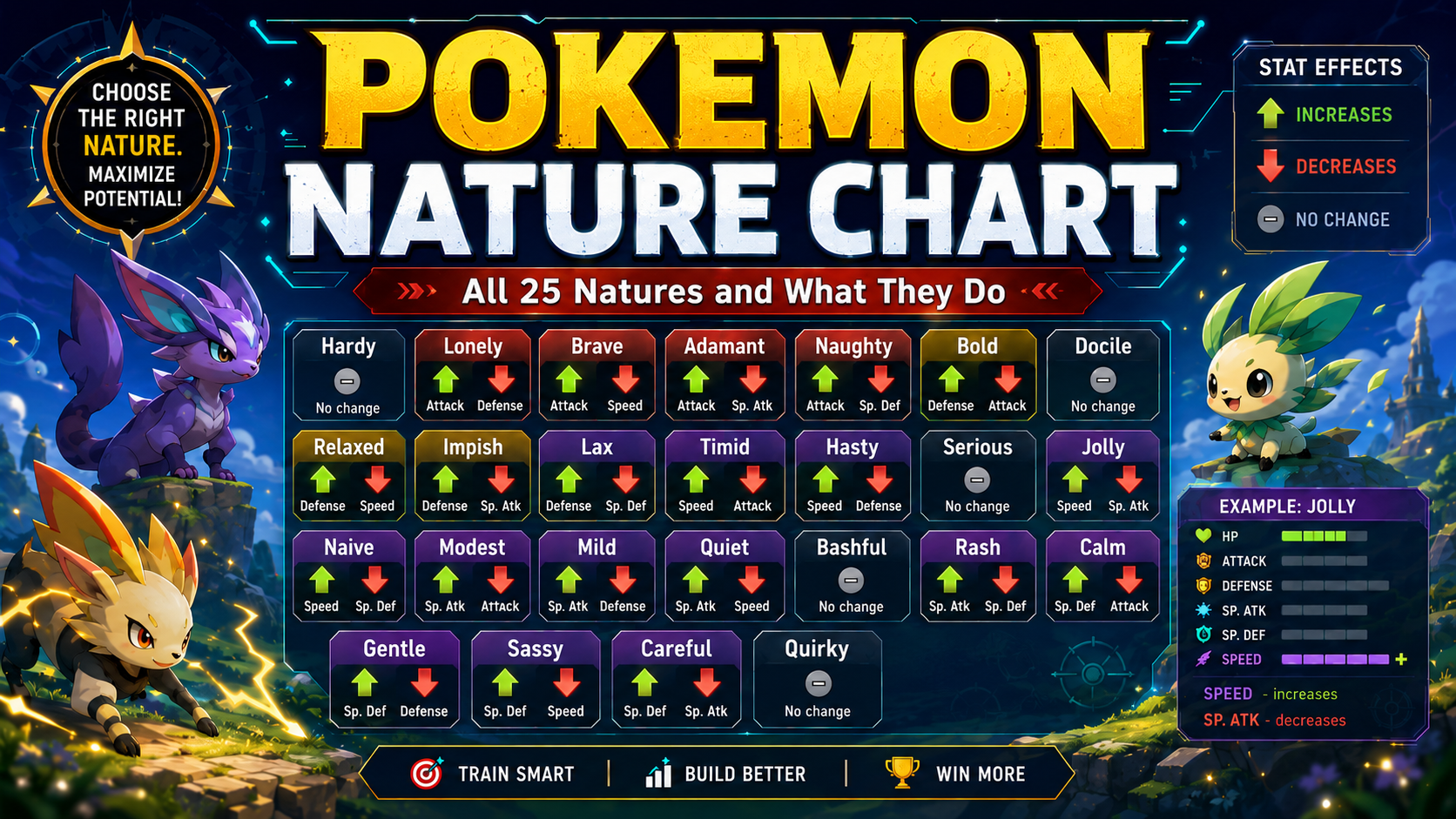
To master stats next, study Pokemon natures and what they do to build even stronger Pokemon